 |
| Incorporating Coding in the Classroom (Edutopia)
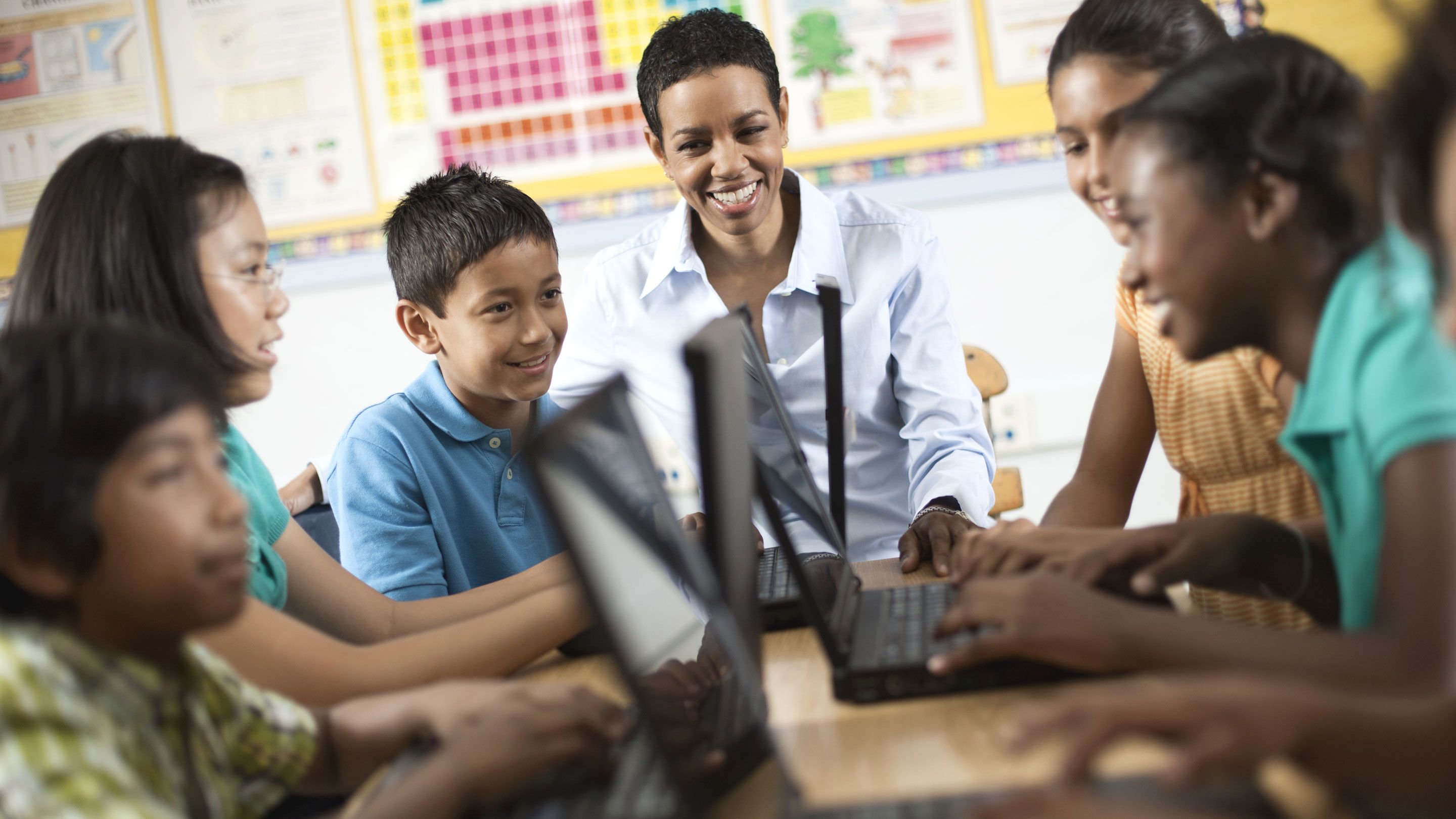
As a kindergarten teacher last year & a 5th grade teacher this year, I have definitely learned that when introducing any new skill, idea, or concept to students, it can be difficult for them. When first learning something in my class, my 5th graders will always say, "This is TOO hard," "I don't like this," or "I just don't get it." In this crazy journey of teaching, I absolutely love watching my students finally grasp a concept and witness their "lightbulb" moment! In saying this, although incorporating coding into the classroom may be difficult or frustrating, we as educators should want our students to learn these new skills that they will develop from coding so that they can utilize them into the real world. According to Brookhouser and Megnin (2016), "Teaching our kids to code is not about teaching them to be computer programmers. It's about giving them the skills to change the world" (Pg. 60). Exposing our students to new and different things that they are not familiar has the potential to open up so many doors of opportunity in that they can experience new things that just might interest them. If I am being completely honest, before taking this class, I had no idea what coding was or why I should even consider incorporating it into my class. I am thankful that I myself have learned something new as far as coding and can impact my students and coworkers by incorporating it into my classroom so that we all may be enlightened.
In trying to incorporate coding into the classroom, one must first realize and understand the importance of technology usage in the classroom for this current generation and generations to come. According to Brookhouser and Megnin (2016), "The era of the computer as separate from education is over. Students are constantly using computers to access information, create projects, collaborate, solve problems, etc" (Pg. 4). With our world becoming more and more technology savvy, educators must take the time to teach students the correct way in using their technology as well as introducing them to different resources that they can utilize in learning new skills that can be used in the real world. Although we have computer labs and computer classes, our students still need more practice in using their computer literacy skills so that they may truly be successful. According to Add Coding to Your Elementary Curriculum...Right Now, "Early exposure to coding helps teach children how important it is to understand computers as the valuable tools they are rather than merely fun playthings" (Harrell, 2015, para 2). Of course our students know that computers are fun because they can play games, watch videos, and listen to music, but students should also know that computers/technology can be utilized for educational purposes as well.
Incorporating Coding in the Classroom
This video takes viewers on a quick journey into a real elementary classroom in Australia that incorporates coding through the usage of video games. Personally, I found this video to be interesting because the kids were so engaged because they were able to use their own hands to learn something new instead of just having to sit in a desk and listen to their teacher teach something for 15-20 minutes. In the classroom, students should always have the opportunity to explore new things so that they can better learn different skills.
How do WE, as educators, Light the Flame of Student Interest in Coding?In trying to light that flame of interest for our students in incorporating coding into the classroom, we must first let our students know that they will make mistakes with coding and that is okay. Although using code might cause some of our students to experience failure, we should still utilize code in our classrooms because our students must learn these certain skills in order to be successful in the real world. According to Brookhouser and Megnin (2016), educators must "Help your students understand that everyone is afraid of failure but that failures are how we learn, especially in coding" (Pg. 62). Coding can teach our students about the important lesson of perseverance...just because something gets difficult, you don't give up- but, you keep pushing forward regardless. Another way that we can spark our students' interest into coding in the classroom is by making those connections to people and locations that they are familiar with. For example, it would be great if the students could meet and talk with different people in their own community that are familiar with coding or even have a career that utilizes coding. It would also be beneficial to students to make connections with different nearby businesses or locations that utilize coding just so that they can see that coding is useful to all people. Even though not all of our students will find coding or computer science interesting, it is still refreshing to know that there are some students who will take interest in it and just might go on to create a career out of something that I exposed them to in my classroom! According to Brookhouser and Megnin (2016), as educators "Our responsibility is to light within our students a steady flame of interest and confidence in technology and the skill it teaches" (Pg. 69). With everything going on in our world with COVID19, making sure that our students are fluent with technology usage is essential to their future success because one does not know what the future may bring in terms of careers and its reliance on technology or computer literacy. We should make the effort to expose our students to all that we can in the short 10 months that we have our babies so that they may possess all the skills that they may need to be successful in the real world.References: Brookhouser, K., & Megnin, R. (2016). Code in every class: how all educators can teach programming. Irvine, CA: EdTechTeam Press. Coding In The Classroom. (2019). Retrieved from https://www.youtube.com/watch?v=7jo0HbemmW8 |
Wednesday, April 15, 2020
Let's LIGHT the Flame of Student Interest *insert flame emoji*

Wednesday, April 1, 2020
Social Media SAVY in the classroom! ;)
Social media can be defined as networking and sharing ideas/content with others through the usage of apps and websites. It was designed for people from various walks of life, careers, and locations to come together to network, connect, and learn new things. Whether one is connecting with their family members, coworkers, or friends online, the overall purpose of social media is to create and continue communication with others. In teaching students how to make and support their own claims and arguments, social media would be a great tool to use in the classroom. With teaching students how to utilize social media in making their own arguments and claims, we as teachers must first teach our students about the importance of differentiating between accurate and misleading information that is offered through different forms of social media.
According to Hicks and Turner (2017), "Misinformation has become a problem as open access to the internet allows users to share content that has not been vetted," which is believed to be occurring as a result of "users mostly tend to select and share content according to a specific narrative and to ignore the rest" (Pg. 105). When on social media, we tend to repost and share information read based on our own personal emotions about a subject instead of focusing on the facts. This can be problematic at times because in order to properly support and prove an argument/claim, we have to utilize factual information rather than just information based on our own emotions and agenda. By using social media to better learn how to detect misleading information from actual facts, students are able to become better digital readers and writers. Another reason that teachers should utilize social media in the classroom is to teach students about the impression that they are leaving on social media and how that can affect them in their current and future lives. Author Troy Hicks explains this concept well in saying that, "Slowing down just long enough to think through a text message, status update, or tweet--and thinking about audience, purpose, and situation--helps them be responsible, present a good first online impression, and participate actively in a variety of communities" (Pg. 139). Of course we want our students to present themselves in an appropriate manner when communicating with family/friends on social media, but we also want students to take advantage of the digital texts that can be crafted in using social media and collaborating appropriately with the necessary people.
With this being my first year teaching 5th grade, or as I call them "the big kids," I agree that utilizing social media in the classroom can be not only beneficial to the students, but also to teachers. When trying to learn what the best method is for reaching my students and trying to determine what catches and keeps their attention, I had to take a step back and look at learning new things from the point of view of 10-year old kid growing up in this social media savy world! I very quickly learned that ALL of my students have some form of social media on their phones or computers and that social media was the "language" that they spoke. In this social media ted talk mentioned below, Mr. Harry Dyer greatly explains how utilizing social media in the classroom can help us better understand and teach our students.
We know that we can not use social media to teach every standard to our students, but we can utilize it to better understand our students personally as well as to teach our students about crafting their own digital arguments online and the importance of conducting themselves appropriately when using social media. Author Troy Hicks greatly sums up this concept of utilizing social media to teach our students in saying, "Our uses of social media are only as powerful as the teaching that supports these uses" (Pg. 140).
For my example of a social media interaction on the Web that is relevant to education, I chose to use the Instagram account of a 5th grade teacher. This 5th grade teacher uses her instagram account to post about all of the great things that she is doing in her own classroom as well as to provide other teachers ideas and recommendations as to what they can do in their own classrooms.

 I found this to be a great example of a social interaction that discusses education for many reasons, but one in particular being that it exemplifies the MAPS heuristic method mentioned by Hicks and Tuner. Instagram is the media being used for this social interaction with a mode of informative writing to provide resources for teachers in order to make their classroom better for their students. The intended audience of this instagram account is specifically 5th grade teachers, but also other elementary school teachers, potential education majors/student teachers, and parents of 5th grade students. Similar to the mode as mentioned earlier, the purpose of this account is to inform other teachers/potential teachers and parents about the plethora of resources that can be utilized to teach students in the classroom and at home. Instagram is the situation for this social interaction in that it is easily accessible for teachers and parents to get the information and resources that they need to be successful in and out of the classroom. It is also an easy outlet for the owner of the hello_fifth account to post the necessary resources and tips for her audiences to utilize.
I love to use this resource for my own 5th grade classroom because I am a visual learner and I love that I can actually see what the teacher is doing in her classroom in order to decide how I can apply certain changes to my own classroom. I also like that I can communicate with other surrounding teachers to get insight as to what they're doing in their own classroom as well as if it's working or not.
Social media is definitely not something that is going away anytime soon for our students or adults. So, it is important that instead of trying to ignore the effect of social media that we instead utilize it in our classroom to take advantage of how it catches and keeps the attention of our students. If used and taught the right way to our students in the classroom, social media can be extremely beneficial to students and teachers!
References:
Hicks, T. (2013). Crafting digital writing: Composing texts across media and genres. Portsmouth,
NH: Heinemann.
Incorporating & Accounting for Social Media in Education. Harry Dyer. TEDxNorwichEd. (2016).
Retrieved from Incorporating & Accounting for Social Media in Education.
Turner, K., & Hicks, T. (2017) Argument in the real world: Teaching adolescents to
read and write digital texts. Portsmouth, NH: Heinemann.
 |
| Examples of commonly used Social Media Applications |
With this being my first year teaching 5th grade, or as I call them "the big kids," I agree that utilizing social media in the classroom can be not only beneficial to the students, but also to teachers. When trying to learn what the best method is for reaching my students and trying to determine what catches and keeps their attention, I had to take a step back and look at learning new things from the point of view of 10-year old kid growing up in this social media savy world! I very quickly learned that ALL of my students have some form of social media on their phones or computers and that social media was the "language" that they spoke. In this social media ted talk mentioned below, Mr. Harry Dyer greatly explains how utilizing social media in the classroom can help us better understand and teach our students.
We know that we can not use social media to teach every standard to our students, but we can utilize it to better understand our students personally as well as to teach our students about crafting their own digital arguments online and the importance of conducting themselves appropriately when using social media. Author Troy Hicks greatly sums up this concept of utilizing social media to teach our students in saying, "Our uses of social media are only as powerful as the teaching that supports these uses" (Pg. 140).
Teachers Can be Social Media SAVY TOO!
 . .
. . 


I love to use this resource for my own 5th grade classroom because I am a visual learner and I love that I can actually see what the teacher is doing in her classroom in order to decide how I can apply certain changes to my own classroom. I also like that I can communicate with other surrounding teachers to get insight as to what they're doing in their own classroom as well as if it's working or not.
Social media is definitely not something that is going away anytime soon for our students or adults. So, it is important that instead of trying to ignore the effect of social media that we instead utilize it in our classroom to take advantage of how it catches and keeps the attention of our students. If used and taught the right way to our students in the classroom, social media can be extremely beneficial to students and teachers!
References:
Hicks, T. (2013). Crafting digital writing: Composing texts across media and genres. Portsmouth,
NH: Heinemann.
Incorporating & Accounting for Social Media in Education. Harry Dyer. TEDxNorwichEd. (2016).
Retrieved from Incorporating & Accounting for Social Media in Education.
Turner, K., & Hicks, T. (2017) Argument in the real world: Teaching adolescents to
read and write digital texts. Portsmouth, NH: Heinemann.
Subscribe to:
Comments (Atom)