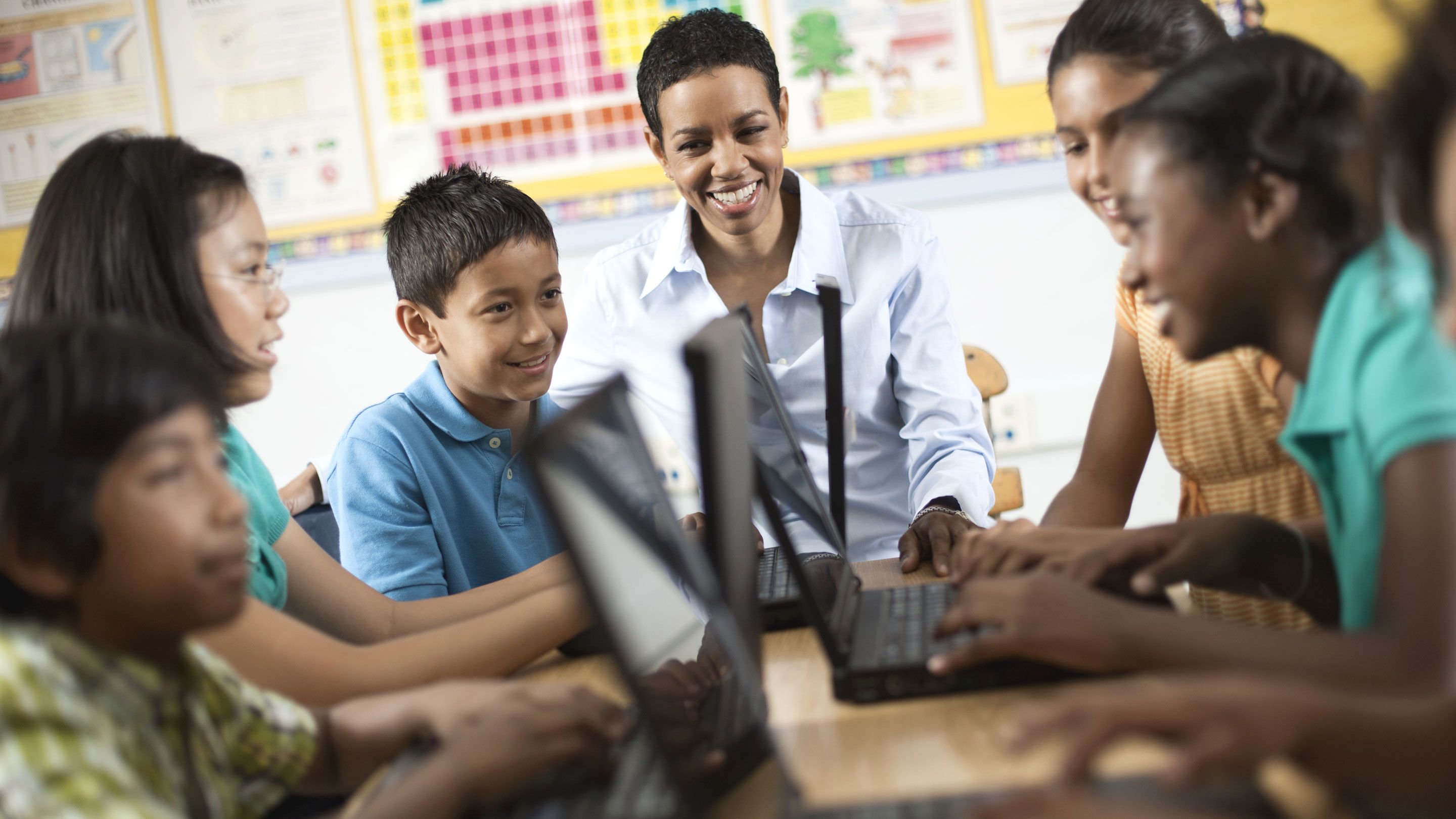
With this being my 5th year in the classroom and 4th year teaching 5th grade students, I can certainly say that utilizing technology in the classroom is vital in that it enhances the instruction and learning of students. Using different forms of technology, such as iPads, chrome books, smart boards, and projectors, allows for increased student engagement, involvement, and interest in academic content in that students are able to take an active role in their own learning when being able to use technology. Once upon a time, teachers would simply lecture and do all the talking when it came to lessons in the classroom, but now with us being in a digital age, there has been a shift in education to more student autonomy. Student autonomy allows for students to be active participants in their own learning and to make decisions and choices on how best they learn and receive information. With this being said, technology integration in the classroom is a great way for teachers to better meet the learning needs of all students. Some great technology applications to use are Google Classroom, Youtube, Flipgrid, ClassDojo, Canva, and etc. According to What Is Successful Technology Integration?, "Successful technology integration is achieved when the use of technology is: routine and transparent, accessible and readily available for the task at hand, and supporting the curricular goals, and helping the students to effectively reach their goals" (Edutopia, 2023). In teaching our students content and trying to help them to be academically successful, it is important to integrate technology into instruction to better routinely meet the diverse learning needs of all students.
Professional Development
Although integrating technology in the classroom is important, teachers must first be properly trained in professional development on how to use different types of technology and applications in the classroom. According to The Technology Coordinator's Handbook (2017), "A successful professional development program allows a school district to prepare teachers (and in turn, students) to use technology as a natural part of the curriculum" (Frazier and Hearrington, pg. 38) There is nothing more frustrating, as a classroom teacher, than to have great technology and resources, but no idea on how to use it or how to get students started with using the technology. Although professional development can be expensive and time-consuming, it is crucial that technology coordinators take the appropriate time to plan and budget for PD so that teachers can be properly trained on technology devices and programs. Other methods of technology professional development are Youtube videos, podcasts, and online forums, which will compensate for schools that have a lack of funding or time for a technology professional to come out and conduct an in-person professional development training. No matter the method, what's most important is that teachers have opportunities to attend and receive professional development technology training.
For new and veteran teachers, it can be exasperating to learn something new or feel as though one is being forced to incorporate something new into the classroom without proper training. It is the job of technology coordinators to ensure that teachers feel supported and heard when learning about new technology or a new program. According to Get Creative with Professional Development for Technology Integration, "Leadership should encourage a growth mindset by giving opportunities such as staff meetings and team-building time to utilize a technology integration experience. Teachers should have access to an authentic and safe setting in which they may receive suggestions and feedback. This forces the refinement and reflection process in a very low-risk environment that will allow for improvement before students experience it in the classroom" (Learning.com, 2023). Similar to how we give students time to try new things and give them room to make mistakes and learn from them- we as teachers need to be given the same courtesy when receiving professional development on new technology.
Although there is a huge need for technology integration in the classroom, there is also an even bigger need for professional development so that teachers can be properly trained in the technology that they are incorporating in their classroom. Once teachers have received the proper training and guidance necessary to utilize technology, then they will be able to better teach and help students to be more academically successful in the classroom.
References
Frazier, M., & Hearrington, D. (2017). The Technology Coordinator's handbook. International Society for Technology in Education.
Person. (2007, November 6). What is successful technology integration? Edutopia. Retrieved April 9, 2023.
Team, L. (2023, March 24). Professional Development for Technology Integration. Learning. Retrieved April 9, 2023.
YouTube. (2012, July 25). Investing in professional development for technology and inquiry-based learning. YouTube. Retrieved April 9, 2023.
In using technology in schools, the main goal for its usage should always be to enhance the teaching, instruction, and learning for the benefit of all students. In order to have and utilize technology efficiently in schools, there must first be a technology plan in place.According to The Technology Coordinator's Handbook (2017), "Any school or district that wants to make sure technology expenditures have the intended impact for students and staff must have a carefully developed technology plan. This plan represents a three-to five- year road map of where the school or district wishes to go with technology" (Frazier and Hearrington, p. 167). I have often heard that not having a plan at all means that it is automatically a plan to fail. In saying this, a technology plan allows for teachers, administrators, technology leaders, and stakeholders to come together and develop a plan for the technology that they want to purchase as well as the purpose that this technology will serve in the schools. When developing a technology plan, it is important to take the time to research different available resources for technology as well as to assess the technology that is already being used to see what changes need to be made. According to The Technology Coordinator's Handbook, "No planning process can be effective without data to support decision making" (Frazier and Hearrington, p. 170). After taking the time to assess the technology in the building, look at available resources, and develop a plan based on adequate data, then the technology coordinator along with the technology team can start planning a budget for the money that will need to be spent on new technology in the classroom.
Technology Budget In order to provide a school with an effective technology program to enhance student learning, school administrators, stakeholders, and technology coordinators have to decide on a technology budget that will adequately fund all the necessary technology, equipment, and software. Although it is easy to think that the more something costs, the better it will be, that is not always the case. According to 7 Steps to Preparing a Technology Plan for Schools, "If the technology isn’t reliable, teachers won't use it and the program will fail. It doesn’t have to be expensive, but it does have to be reliable" (Knowing Technologies, 2023). Taking the time to ensure that the technology being purchased will actually be an asset to the instruction of the teacher and the learning of the students is what matters most. Planning a technology budget is one of the main reasons why the job of being a technology coordinator can be difficult and time-consuming. According to The Technology Coordinator's Handbook, "It is the responsibility of the tech coordinator to create a workable first draft of the budget by successfully balancing the various needs and wants along with their related costs" (Frazier and Hearrington, p. 175). A plethora of planning, communication, and time will go into planning this budget and ensuring that the right amount of technology is purchased within the school's means. Taking the time to train teachers on how to actually utilize the new technology purchased in their classrooms is also a part of the technology budget in that it is considered professional development. "Professional development strategies should ensure that teachers, school library personnel and administrators know how to effectively use the technologies described in the plan. In order to improve education and support technology-rich learning environments, start by describing the professional development strategies, addressing key questions, and reflecting on what’s worked and not worked in the past" (7 Steps to Preparing a Technology Plan for Schools, Knowing Technologies, 2023). Proper training in using reliable technology is crucial for our teachers and students to be successful in the classroom.
So, the question remains the same- is there really such a thing as a technology plan? Yes! Technology plans do exist....#TrueStory.
References
Frazier, M., & Hearrington, D. (2017). The Technology Coordinator's handbook. International Society for Technology in Education.
7 tips for preparing a technology plan for Schools. Knowing Technologies. (2021, July 5). Retrieved March 15, 2023.
As a classroom teacher that is still growing, learning, and evolving in this ministry of teaching, my goal for any lesson that I teach is for that lesson to be intentional, engaging, and meaningful to my students. Teaching ELA and social studies to 5th graders everyday can be challenging in that they are not always interested in the content, but it is my job to look for ways that I can draw in my students so that they will develop an interest in what they are learning. Utilizing technology in the classroom is a great way to increase student interest, involvement, and engagement in course content and material. According to How to Use Technology in the Classroom: Benefits and Effects, "Utilizing different types of technology in the classroom creates learners who are actively engaged with learning objectives. The implementation of technology also creates pathways for differentiated instruction to meet the unique needs of students as individual learners within a broader classroom climate" (Drexel University School of Education, n.d). When using technology in the classroom, it should not be utilized as a method to substitute for face-to-face teaching or in-person conversations when it comes to student and teacher interactions on a daily basis. The purpose of technology integration in the classroom setting is to enhance the overall instruction given by teachers in an effort to better meet the learning needs of all students.
Where to Begin with Integrating Technology?
In an effort to effectively integrate technology in the classroom, it is important to understand that there are some steps that must take place first in this ongoing process of successful technology usage. First, instructional leaders must make an effort to integrate technology in their everyday dealings so that teachers will be more willing to follow their example. As a teacher, my students follow my lead and have an expectation for me to model things before they actually try things out for themselves. My students know that I have their best interest at heart, so they are more willing to follow my example when it comes to completing classroom tasks and trying new things. This same concept is the same for instructional leaders and teachers when it comes down to integrating technology into the classroom. According to National Center for Education Statistics, "Leadership is the single most important factor affecting the successful integration of technology. This is true at the state level and at the school level. Schools which have made the most progress are those with energetic and committed leaders" (Technology in Schools, n.d). We need our school leaders to be willing and confident to try new technology so that teachers will be more likely motivated to integrate technology in their own classrooms.
Next, schools having a technology coordinator is crucial for the integration of technology. According to The Technology Coordinator’s Handbook (2017), “Successful technology coordinators must possess a wide range of skills and abilities in order to support and facilitate the integration of technology for digital-age teaching and learning and professional development. They must be able to provide technical support for devices and systems and manage or coordinate with others to ensure effective uses and functionality of digital tools" (Frazier and Hearrington, pg. 14). Similar to how teachers have math/reading coaches to support them with math/reading instruction, teachers also need to be supported with technology usage. It is so easy to give a teacher a new form of technology, some directions, and just to have them to figure it out on their own. But, this method is inefficient and will not ensure that technology will be utilized properly in the classroom. It is also the job of the technology coordinator to work with the instructional leaders of the school to schedule professional development for teachers to increase their knowledge in the integration of technology in the classroom. Although we are in a digital era and one would just assume that everyone is confident and knowledgeable about how to properly use and incorporate technology in the classroom, this is not always the case. When trying to plan for and establish professional development for teachers in the area of technology, technology coordinators should be aware of the Standards for Professional Learning and the ISTE Standards for Teachers (Frazier and Hearrington, 2017, pg. 39). Teachers participating in these professional developments allows them to continuously improve their knowledge of technology and better help/teach their students to be more effective technology users in the classroom.
Ways to Integrate Technology in the Classroom
Technology can be integrated into the elementary, middle, and high school classrooms in a plethora of ways! As stated earlier, the overall purpose of integrating technology into the classroom is to enhance instruction for the betterment of students. Using online resources, programs, games, and tools can all contribute to the enhancement of instruction. According to How to Use Technology in the Classroom: Benefits and Effects, "The use of technology during whole-class instruction can foster student engagement for auditory and visual learners. Integrating simple technologies Power Points, games, internet homework assignments, or online grading systems can be difference makers in students' growth in the classroom" (Drexel University School of Education, n.d). Because technology integration in the classroom can be stressful at times when one is not confident or knowledgeable, it is important to know that effective technology integration is not something that will take place over night, but that it's a process that is well worth it for the academic benefit of students.
References
Frazier, M., & Hearrington, D. (2017). The Technology Coordinator's handbook. International Society for Technology in Education.
How to integrate technology in the classroom. School of Education. (n.d.). Retrieved February 14, 2023.
Technology in schools. National Center for Education Statistics (NCES) Home Page, a part of the U.S. Department of Education. (n.d.). Retrieved February 14, 2023.
YouTube. (2019, November 28). Integration of technology in the classroom. YouTube. Retrieved February 14, 2023.
As a kindergarten teacher last year & a 5th grade teacher this year, I have definitely learned that when introducing any new skill, idea, or concept to students, it can be difficult for them. When first learning something in my class, my 5th graders will always say, "This is TOO hard," "I don't like this," or "I just don't get it." In this crazy journey of teaching, I absolutely love watching my students finally grasp a concept and witness their "lightbulb" moment! In saying this, although incorporating coding into the classroom may be difficult or frustrating, we as educators should want our students to learn these new skills that they will develop from coding so that they can utilize them into the real world. According to Brookhouser and Megnin (2016), "Teaching our kids to code is not about teaching them to be computer programmers. It's about giving them the skills to change the world" (Pg. 60). Exposing our students to new and different things that they are not familiar has the potential to open up so many doors of opportunity in that they can experience new things that just might interest them. If I am being completely honest, before taking this class, I had no idea what coding was or why I should even consider incorporating it into my class. I am thankful that I myself have learned something new as far as coding and can impact my students and coworkers by incorporating it into my classroom so that we all may be enlightened. In trying to incorporate coding into the classroom, one must first realize and understand the importance of technology usage in the classroom for this current generation and generations to come. According to Brookhouser and Megnin (2016), "The era of the computer as separate from education is over. Students are constantly using computers to access information, create projects, collaborate, solve problems, etc" (Pg. 4). With our world becoming more and more technology savvy, educators must take the time to teach students the correct way in using their technology as well as introducing them to different resources that they can utilize in learning new skills that can be used in the real world. Although we have computer labs and computer classes, our students still need more practice in using their computer literacy skills so that they may truly be successful. According to Add Coding to Your Elementary Curriculum...Right Now, "Early exposure to coding helps teach children how important it is to understand computers as the valuable tools they are rather than merely fun playthings" (Harrell, 2015, para 2). Of course our students know that computers are fun because they can play games, watch videos, and listen to music, but students should also know that computers/technology can be utilized for educational purposes as well.
Incorporating Coding in the Classroom
This video takes viewers on a quick journey into a real elementary classroom in Australia that incorporates coding through the usage of video games. Personally, I found this video to be interesting because the kids were so engaged because they were able to use their own hands to learn something new instead of just having to sit in a desk and listen to their teacher teach something for 15-20 minutes. In the classroom, students should always have the opportunity to explore new things so that they can better learn different skills.
How do WE, as educators, Light the Flame of Student Interest in Coding?
In trying to light that flame of interest for our students in incorporating coding into the classroom, we must first let our students know that they will make mistakes with coding and that is okay. Although using code might cause some of our students to experience failure, we should still utilize code in our classrooms because our students must learn these certain skills in order to be successful in the real world. According to Brookhouser and Megnin (2016), educators must "Help your students understand that everyone is afraid of failure but that failures are how we learn, especially in coding" (Pg. 62). Coding can teach our students about the important lesson of perseverance...just because something gets difficult, you don't give up- but, you keep pushing forward regardless. Another way that we can spark our students' interest into coding in the classroom is by making those connections to people and locations that they are familiar with. For example, it would be great if the students could meet and talk with different people in their own community that are familiar with coding or even have a career that utilizes coding. It would also be beneficial to students to make connections with different nearby businesses or locations that utilize coding just so that they can see that coding is useful to all people. Even though not all of our students will find coding or computer science interesting, it is still refreshing to know that there are some students who will take interest in it and just might go on to create a career out of something that I exposed them to in my classroom! According to Brookhouser and Megnin (2016), as educators "Our responsibility is to light within our students a steady flame of interest and confidence in technology and the skill it teaches" (Pg. 69). With everything going on in our world with COVID19, making sure that our students are fluent with technology usage is essential to their future success because one does not know what the future may bring in terms of careers and its reliance on technology or computer literacy. We should make the effort to expose our students to all that we can in the short 10 months that we have our babies so that they may possess all the skills that they may need to be successful in the real world.
References:
Brookhouser, K., & Megnin, R. (2016). Code in every class: how all educators can teach programming. Irvine, CA: EdTechTeam Press.
Harrell, M. (2015, March 17). Add Coding to Your Elementary Curriculum. . . Right Now. Retrieved from https://www.edutopia.org/blog/add-coding-elementary-curriculum-now-matt-harrell Coding In The Classroom. (2019). Retrieved from https://www.youtube.com/watch?v=7jo0HbemmW8
Social media can be defined as networking and sharing ideas/content with others through the usage of apps and websites. It was designed for people from various walks of life, careers, and locations to come together to network, connect, and learn new things. Whether one is connecting with their family members, coworkers, or friends online, the overall purpose of social media is to create and continue communication with others. In teaching students how to make and support their own claims and arguments, social media would be a great tool to use in the classroom. With teaching students how to utilize social media in making their own arguments and claims, we as teachers must first teach our students about the importance of differentiating between accurate and misleading information that is offered through different forms of social media.
Examples of commonly used Social Media Applications
According to Hicks and Turner (2017), "Misinformation has become a problem as open access to the internet allows users to share content that has not been vetted," which is believed to be occurring as a result of "users mostly tend to select and share content according to a specific narrative and to ignore the rest" (Pg. 105). When on social media, we tend to repost and share information read based on our own personal emotions about a subject instead of focusing on the facts. This can be problematic at times because in order to properly support and prove an argument/claim, we have to utilize factual information rather than just information based on our own emotions and agenda. By using social media to better learn how to detect misleading information from actual facts, students are able to become better digital readers and writers. Another reason that teachers should utilize social media in the classroom is to teach students about the impression that they are leaving on social media and how that can affect them in their current and future lives. Author Troy Hicks explains this concept well in saying that, "Slowing down just long enough to think through a text message, status update, or tweet--and thinking about audience, purpose, and situation--helps them be responsible, present a good first online impression, and participate actively in a variety of communities" (Pg. 139). Of course we want our students to present themselves in an appropriate manner when communicating with family/friends on social media, but we also want students to take advantage of the digital texts that can be crafted in using social media and collaborating appropriately with the necessary people.
With this being my first year teaching 5th grade, or as I call them "the big kids," I agree that utilizing social media in the classroom can be not only beneficial to the students, but also to teachers. When trying to learn what the best method is for reaching my students and trying to determine what catches and keeps their attention, I had to take a step back and look at learning new things from the point of view of 10-year old kid growing up in this social media savy world! I very quickly learned that ALL of my students have some form of social media on their phones or computers and that social media was the "language" that they spoke. In this social media ted talk mentioned below, Mr. Harry Dyer greatly explains how utilizing social media in the classroom can help us better understand and teach our students.
We know that we can not use social media to teach every standard to our students, but we can utilize it to better understand our students personally as well as to teach our students about crafting their own digital arguments online and the importance of conducting themselves appropriately when using social media. Author Troy Hicks greatly sums up this concept of utilizing social media to teach our students in saying, "Our uses of social media are only as powerful as the teaching that supports these uses" (Pg. 140).
Teachers Can be Social Media SAVY TOO!
For my example of a social media interaction on the Web that is relevant to education, I chose to use the Instagram account of a 5th grade teacher. This 5th grade teacher uses her instagram account to post about all of the great things that she is doing in her own classroom as well as to provide other teachers ideas and recommendations as to what they can do in their own classrooms.
. .
I found this to be a great example of a social interaction that discusses education for many reasons, but one in particular being that it exemplifies the MAPS heuristic method mentioned by Hicks and Tuner. Instagram is the media being used for this social interaction with a mode of informative writing to provide resources for teachers in order to make their classroom better for their students. The intended audience of this instagram account is specifically 5th grade teachers, but also other elementary school teachers, potential education majors/student teachers, and parents of 5th grade students. Similar to the mode as mentioned earlier, the purpose of this account is to inform other teachers/potential teachers and parents about the plethora of resources that can be utilized to teach students in the classroom and at home. Instagram is the situation for this social interaction in that it is easily accessible for teachers and parents to get the information and resources that they need to be successful in and out of the classroom. It is also an easy outlet for the owner of the hello_fifth account to post the necessary resources and tips for her audiences to utilize.
I love to use this resource for my own 5th grade classroom because I am a visual learner and I love that I can actually see what the teacher is doing in her classroom in order to decide how I can apply certain changes to my own classroom. I also like that I can communicate with other surrounding teachers to get insight as to what they're doing in their own classroom as well as if it's working or not.
Social media is definitely not something that is going away anytime soon for our students or adults. So, it is important that instead of trying to ignore the effect of social media that we instead utilize it in our classroom to take advantage of how it catches and keeps the attention of our students. If used and taught the right way to our students in the classroom, social media can be extremely beneficial to students and teachers!
References:
Hicks, T. (2013). Crafting digital writing: Composing texts across media and genres. Portsmouth,
NH: Heinemann.
Incorporating & Accounting for Social Media in Education. Harry Dyer. TEDxNorwichEd. (2016).
Retrieved from Incorporating & Accounting for Social Media in Education.
Turner, K., & Hicks, T. (2017) Argument in the real world: Teaching adolescents to
read and write digital texts. Portsmouth, NH: Heinemann.
As educators, we always want an answer to the million dollar question, "How can I continuously engage my students during instruction?" As a result of this digital era, one way that educators can engage students when teaching is by incorporating educational videos during instructional time. In this Importance of Video Education in Schools Video, two teachers and their students discuss the effectiveness of using videos in the classroom in that it allows students a greater opportunity to comprehend the material being taught to them.
Utilizing videos in the classroom opens doors to a plethora of opportunities, ideas, and new things for students to embark on that they would not have normally experiences with just using pen and paper. For example, in using digital video texts, students have the opportunity to not only watch these texts for knowledge, but also to create their own videos for application of what they have learned. According to Hicks (2013), "....videos can serve many purposes and that just as we teach students to 'read like a writer,' we need to help them 'view like a videographer." (Pg. 108). This simply reaffirms the fact that by students digesting and creating their own videos, they are developing even more skills that will help them grow in their other academic areas. For example, students creating their own videos causes them to become better writers due to the fact that students are able to use different genres of writing, informational, narrative, and argumentative writing, when creating their video texts. In my own classroom, I always like to make sure that I give my students an opportunity to be creative and to show off their talents to one another by experiencing new things because they need to be able to think and work outside of the norm so that they may better excel academically in and out of the classroom. According to Troy and Hicks (2017), "...giving people--children, adolescents, and adults--an opportunity to play with a video editing editing task in a low-stakes manner is often a good way to introduce bigger projects such as digital stories or public service announcements" (pg. 97) In saying this, one creating their own videos can lead to them embarking on other learning opportunities. Although it sometimes can seem difficult to change the routine of one's instruction, it is always beneficial to students if educators remain flexible in their teaching so that students may continue to grow academically. Incorporating video usage and creation into the classroom is vital to the exploration and technological skills for our students, especially with being in this increasingly digital era.
According to Using Video Content to Amplify Learning, "Video clips can be a great tool to assist students in gaining that deeper understanding of content. It's important to have a clear purpose for using that film, documentary, or news clip" (Alber, 2019, para. 2). Although the usage of videos in the classroom enhance and amplify our instruction, educators still have to make sure that the videos that we show are meaningful with a purpose. Incorporating technology should be thought of as an add-on to a lesson, but not the entire lesson, depending on the grade level that one is teaching. Using videos can definitely be an asset to students and teachers if used properly, but can also be considered a hindrance if not used properly for instruction.
At the beginning of the Spring semester, my classmates and I were assigned to create an introductory video of ourselves that gave information about who we are, where we're from, as well as our individual journeys in our teaching careers. When making my introductory video, I knew my audience would be my professor as well as my classmates, so I wanted to make sure that I incorporated and included information that appealed/interested them since they were my target audience. If I am being completely honest, I created my introductory video on an evening after a long work day with 50 5th graders and it definitely was not my absolute best work. To make my introductory video better, I think that I could include the quality of my video, possibly incorporate some music or pictures, and some animations to create a better flow of what I am narrating in the background. In the past, I have created numerous videos before for classes or just on social media, but I can not say that I had a true understanding of the terminology "digital video texts as mentor texts" especially when thinking about teaching my own groups of students. In Crafting Digital Writing, Author Hicks discusses "MAPS," an acronym that stands for "mode, media, audience, purpose, and situation" (Hicks, 2013). This acronym is a way to set the expectation for what digital video texts should incorporate if utilizing for instructional purposes. When examining my introductory video based on the MAPS acronym, I can truly see the areas that I need to improve on in order to have a better quality video.
To begin the revisions of my video, I went back to my original video and made a mental note on the different things that I could improve on, make better, or that I wanted to keep the same. I decided to keep my audio the same because I gave a lot of good information, but just needed to display my information in a better format. For my new video, I used iMovie on my Mac and added different images and transitions to better enhance the content being presented in my video. After completing this module and reading the information about audio/video, it is definitely more evident to me about the impact that a good video can have on how well someone comprehends something.
Alber, R. (2019, March 18). Using Video Content to Amplify Learning. Retrieved from https://www.edutopia.org/article/using-video-content-amplify-learning
Hicks, T. (2013). Crafting digital writing: Composing texts across media and genres. Portsmouth,
NH: Heinemann.
Turner, K., & Hicks, T. (2017) Argument in the real world: Teaching adolescents to
read and write digital texts. Portsmouth, NH: Heinemann.
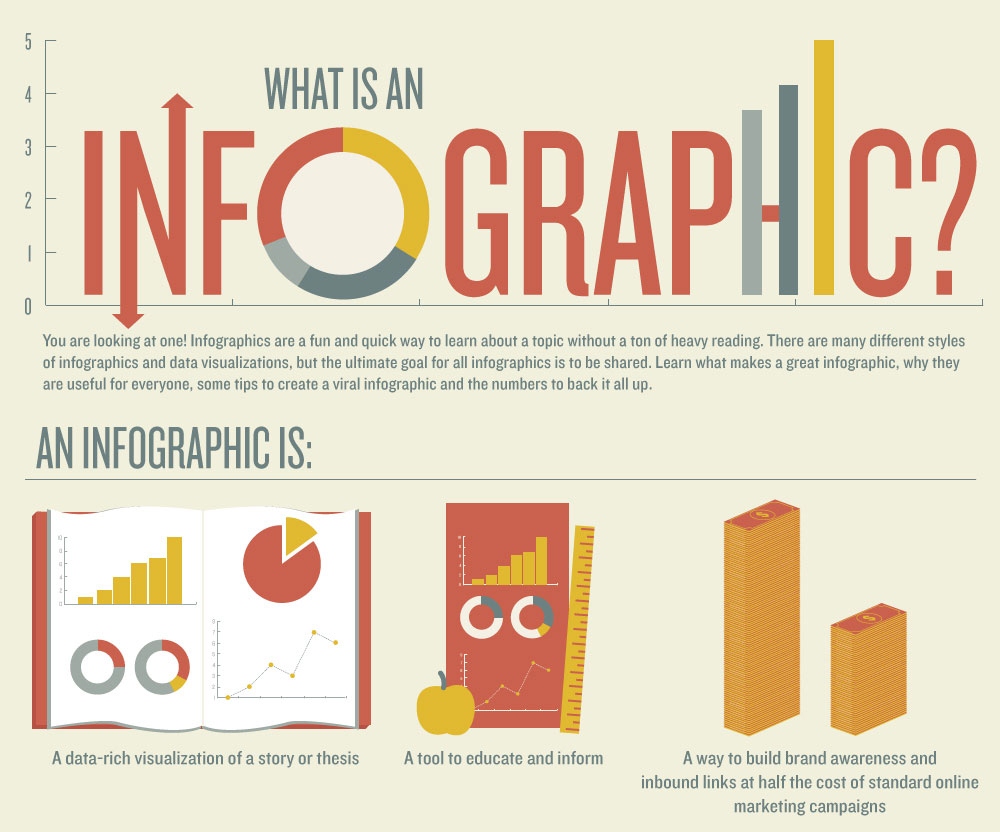
In this new technology age that is steady growing more and more advanced, there are numerous ways to present information and material to different types of audiences. In my elementary, middle, and high school years of school, making a video or a powerpoint were the most popular ways to display a presentation to one's peers/classmates, teachers/professors, and colleagues. Although I am and will always be Powerpoint presentation fanatic (simply because this is what I grew up making), I am excited to discover and learn about the rise in infographics for not only today's students in the classroom, but for all people in need of a presentation to be presented to a certain audience. According to Hicks and Turner (2017), the definition of infographics are graphic visual representations of information, data or knowledge intended to present complex information quickly and clearly (p. 60). To be more specific in using simplistic terms, infographics are simply another method of presenting one's argument on a subject or topic in using graphic visual aides. Due to so much emphasis being placed on the importance of teaching digital arguments to our students, it is also of the same importance that we expose our students to infographics so that they may more effectively argue and prove their claim about a side of an argument by using the necessary graphic visual representation for support. In this short video, we see in greater detail why infographics are so important today and the benefits that they give our students in the classroom as well as adults in the workplace.
As educators, we should also find infographics to be very helpful in our instruction in that they are a great teaching tool to utilize for our students since the information in broken down for easier understanding. In just my short year and 7 months of teaching, I have learned that all students learn in different ways, but having a visual aid or model is helpful to all students because it allows for students to make that necessary connection from the visual aid to the concept being taught. According to the website article, Why Infographics Are So Effective in Educational Contexts, "Infographics prove effective in educational contexts because they use imagery to highlight, explain, or enhance text-based information" as well as. "has the unique ability to capture attention and convey information." (Copypress, n.d.). With teaching kindergarten last school year and now fifth grade this year, both grades have 1 big thing in common- it is so difficult and tiresome to keep them engaged at all times! Both kindergarteners and fifth graders are wiggle worms and love to move around, so utilizing infographics in the classroom in a great tool to use in the classroom to capture and maintain the attention of my students.
Not only should we incorporate infographics in our classrooms during our instructional time, but we should also allow our students the opportunity to become familiar with as well as practice with utilizing infographics on their own time in class. Having a student to create their own infographic on a topic is a great way for teachers to assess students on how well they comprehend their information on their topic as well as grasped the content well enough to make a visual representation to teach someone else. According to Hicks and Turner (2017), "...we realize that creating infographics allows students to engage in inquiry in interesting ways" (p. 74). The older and more mature that our students become, then the more questions they start to ask about different things. In the classroom, inquiry is an extremely good thing for our students to possess because this means that they are interested in the material that they are learning and are yearning to learn more by asking questions and hopefully to eventually do research on their subject. Students engaging in more inquiry also means that they are having to practice the skill of researching and discovering text evidence that can accurately back up their claim in order to prove their point. In my own classroom of fifth graders, text evidence and supporting details are two of the biggest skills that we stress daily and struggle with! So, I find it extremely encouraging to know that through the usage of infographics in the classroom, inquiry increases which will lead to students getting better at finding text evidence and supporting details to support their answers and claims.
This Google Slides presentation breaks down just a mere few of the reason why utilizing infographics is beneficial to students and educators!
References:
Neppes, R. (2018, April 4). The Rise of Infographics in Public Relations and Journalism. Retrieved from https://buchananpr.com/2015/12/the-rise-of-infographics-in-public-relations-and-journalism
The Benefits of Infographics for Education - Content Marketing Agency: Content Marketing Services by CopyPress. (n.d.). Retrieved from https://www.copypress.com/kb/infographics/the-benefits-of-infographics-for-education/
Turner, K., & Hicks, T. (2017) Argument in the real world: Teaching adolescents to read and write digital texts Portsmouth, NH: Heinemann.