Wednesday, February 19, 2020

Are Infographics REALLY that Important??

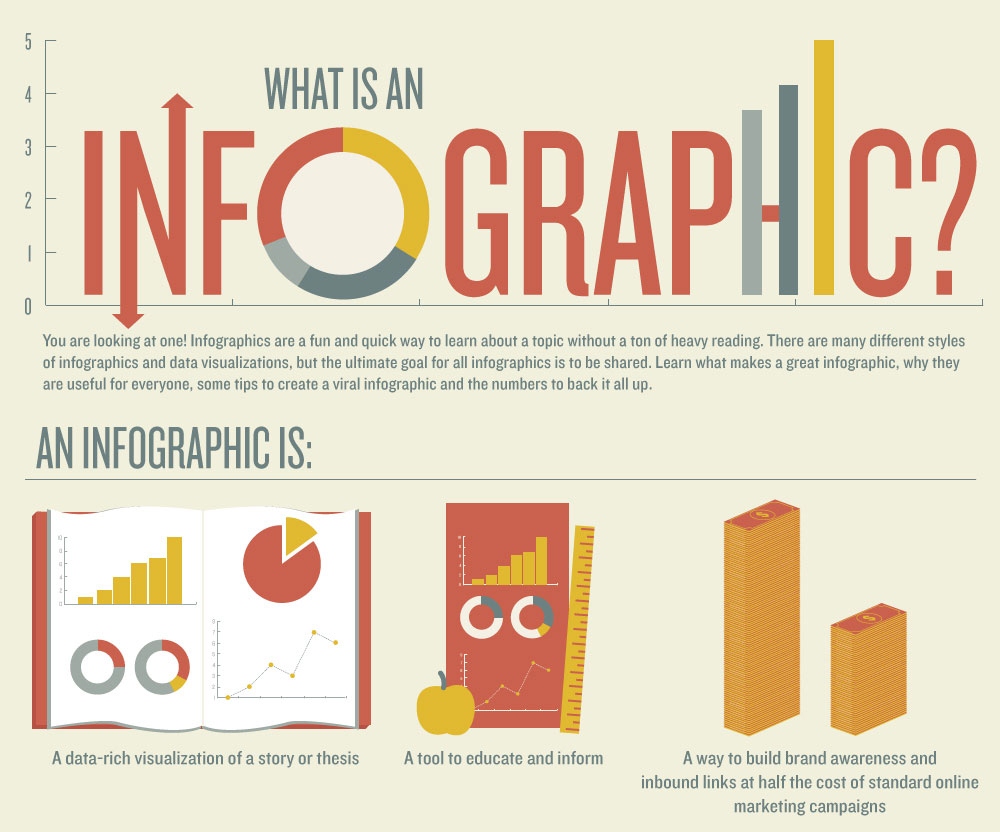
Image result for infographics

In this new technology age that is steady growing more and more advanced, there are numerous ways to present information and material to different types of audiences. In my elementary, middle, and high school years of school, making a video or a powerpoint were the most popular ways to display a presentation to one's peers/classmates, teachers/professors, and colleagues. Although I am and will always be Powerpoint presentation fanatic (simply because this is what I grew up making), I am excited to discover and learn about the rise in infographics for not only today's students in the classroom,  but for all people in need of a presentation to be presented to a certain audience. According to Hicks and Turner (2017), the definition of infographics are graphic visual representations of information, data or knowledge intended to present complex information quickly and clearly (p. 60). To be more specific in using simplistic terms, infographics are simply another method of presenting one's argument on a subject or topic in using graphic visual aides. Due to so much emphasis being placed on the importance of teaching digital arguments to our students, it is also of the same importance that we expose our students to infographics so that they may more effectively argue and prove their claim about a side of an argument by using the necessary graphic visual representation for support. In this short video, we see in greater detail why infographics are so important today and the benefits that they give our students in the classroom as well as adults in the workplace.


As educators, we should also find infographics to be very helpful in our instruction in that they are a great teaching tool to utilize for our students since the information in broken down for easier understanding. In just my short year and 7 months of teaching, I have learned that all students learn in different ways, but having a visual aid or model is helpful to all students because it allows for students to make that necessary connection from the visual aid to the concept being taught. According to the website article, Why Infographics Are So Effective in Educational Contexts, "Infographics prove effective in educational contexts because they use imagery to highlight, explain, or enhance text-based information" as well as. "has the unique ability to capture attention and convey information." (Copypress, n.d.). With teaching kindergarten last school year and now fifth grade this year, both grades have 1 big thing in common- it is so difficult and tiresome to keep them engaged at all times! Both kindergarteners and fifth graders are wiggle worms and love to move around, so utilizing infographics in the classroom in a great tool to use in the classroom to capture and maintain the attention of my students.

Not only should we incorporate infographics in our classrooms during our instructional time, but we should also allow our students the opportunity to become familiar with as well as practice with utilizing infographics on their own time in class. Having a student to create their own infographic on a topic is a great way for teachers to assess students on how well they comprehend their information on their topic as well as grasped the content well enough to make a visual representation to teach someone else. According to Hicks and Turner (2017), "...we realize that creating infographics allows students to engage in inquiry in interesting ways" (p. 74). The older and more mature that our students become, then the more questions they start to ask about different things. In the classroom, inquiry is an extremely good thing for our students to possess because this means that they are interested in the material that they are learning and are yearning to learn more by asking questions and hopefully to eventually do research on their subject. Students engaging in more inquiry also means that they are having to practice the skill of researching and discovering text evidence that can accurately back up their claim in order to prove their point. In my own classroom of fifth graders, text evidence and supporting details are two of the biggest skills that we stress daily and struggle with! So, I find it extremely encouraging to know that through the usage of infographics in the classroom, inquiry increases which will lead to students getting better at finding text evidence and supporting details to support their answers and claims. 


This Google Slides presentation breaks down just a mere few of the reason why utilizing infographics is beneficial to students and educators!

References:


Neppes, R. (2018, April 4). The Rise of Infographics in Public Relations and Journalism. Retrieved from https://buchananpr.com/2015/12/the-rise-of-infographics-in-public-relations-and-journalism

The Benefits of Infographics for Education - Content Marketing Agency: Content Marketing Services by CopyPress. (n.d.). Retrieved from https://www.copypress.com/kb/infographics/the-benefits-of-infographics-for-education/

Turner, K., & Hicks, T. (2017) Argument in the real world: Teaching adolescents to read and write digital texts Portsmouth, NH: Heinemann.


#DigitalArgumentsMatter


"Teaching students to craft digital arguments is more than a life skill for college or career. It is a skill for LIFE."

-Kristen Hawley Turner and Troy Hicks

In this increasingly technology-driven world, we as a people are continuously constructing and being bombarded by digital arguments daily. According to Hicks and Turner (2017), digital arguments are arguments that express a person's point of view on a subject that can be visual, written, spoken, or aural (p.6). In order to properly stake a claim or make a rebuttal within a digital argument, it is imperative to have proper evidence to support one's argument. Although it is common to see digital arguments each and everyday, one cannot assume that students already know the reasoning behind why digital arguments are of importance or how to properly represent oneself online when being expressive about a topic.

With me being a 5th grade ELA teacher, I  am constantly teaching, reminding, and nagging my students to always support their answer with text evidence or to make sure that you can back up your claim with good information if you want to prove a point. Once I  started reading a few chapters in Hicks and Turner's Argument in the Real World, I  truly began to see the sense of urgency of us, as educators, in teaching our students how to create their own digital arguments as it will help them be critical thinkers and better writers.


Digital Arguments are of Great Importance because...
1.) Teaching digital arguments to our students is important because it grants them the opportunity to be critical thinkers. Due to our world quickly becoming so technology savvy, it is of equal importance for students to be fluent in both print and digital writing. According to Teaching Argument in the Digital World, "crafting digital arguments requires that writers understand and are able to use various forms of media to create arguments in a range of subgenres, or modes, of the argumentative form," which simply means that writers are having to think more critically of how they can back up their arguments with using the plethora of resources that they have. (Audet, 2016). With students utilizing their knowledge of their resources in their digital arguments, it will allow for their arguments to be more effective due to the amount of good support provided for the argument as well as stronger because of the structure of the information given. Although students learning how to construct their own digital arguments may be considered challenging at times, it is indeed necessary for the growth of our students' critical thinking skills.

https://blog.heinemann.com/teaching-argument-digitalworld

2.) Students being educated on the craft of digital arguments is also beneficial because it allows for them the chance to become stronger writers. In my own fifth grade class, I constantly make comments such as, "Be sure to answer the question that you are being asked" and "Double-check your work to make sure that you are actually answering the question that is being asked of you and not providing any incorrect information just because it can be viewed in the text." I  say these phrases to my students all the time simply because we have a hard time with properly providing textual evidence to support our arguments that is actually relative to our writing. According to Hicks and Turner (2017), "Digital writing requires us to make intentional choices about what we want to say, as well as how we choose the media in which we say it" (p.1). I find this fact very enlightening because it simply confirms the comparison between writing an essay and digital writing in that digital writing is more complex and requires a student to be more intentional with their writing in proving their argument. In the article, "What Makes A Digital Argument Effective," the topic of the importance of declarative and procedural writing is greatly discussed as it relates to digital writing because each form of writing plays a purposeful role in a student's journey of being a good writer. Declarative and procedural writing both cause for students to be specific, informative, and effective in proving their arguments with evidence in digital arguments, which can only increase the writing ability of our students in a positive manner.


Digital arguments and literacy are imperative to the success of our students in this increasingly modernized world in which we live because these skills not only prepare them for their next grade level, potential careers, or college.....but, there are also life skills that our students can benefit from greatly.

References
Turner, K., & Hicks, T. (2017) Argument in the real world: Teaching adolescents to read and write digital texts Portsmouth, NH: Heinemann.

Audet, L. (n.d.). Teaching Argument in the Digital World. Retrieved from https://blog.heinemann.com/teaching-argument-digitalworld

Ardovino, E. (2018, September 20). Effective Digital Arguments. Retrieved from https://medium.com/@eardovin/effective-digital-arguments-f75a0a10d081